The New Uniform Is No Uniform.
How Kornit’s direct-to-garment technology could make promotional apparel more personal, responsive—and far less predictable.
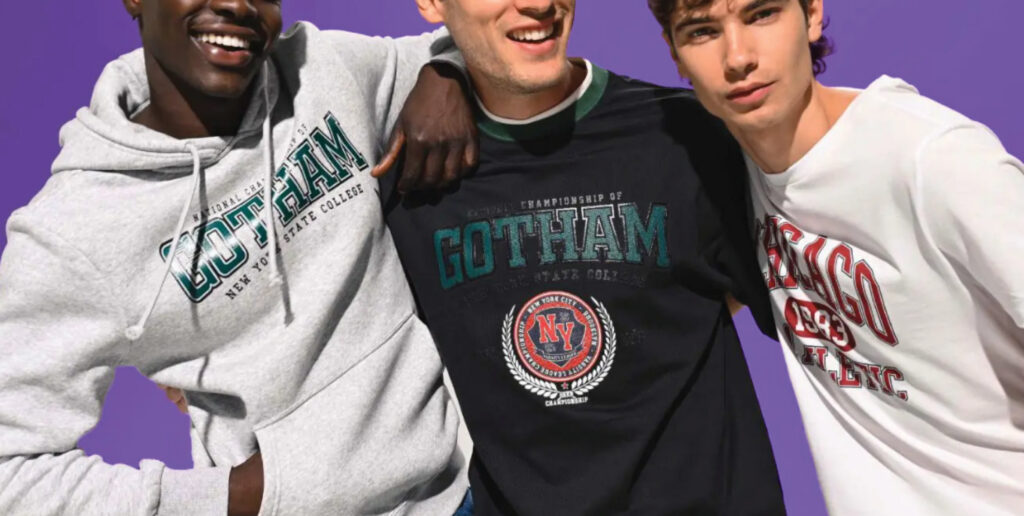
Promotional apparel has traditionally followed a familiar formula: choose a blank, add a logo, order enough units to make the price work and hope people wear it.
Kornit’s industrial direct-to-garment technology offers a more interesting model: print what is wanted, when it is wanted, in quantities that make sense.
That may sound like a production upgrade. For promotional marketers, it is really a creative one.
The technology, without the tech-speak
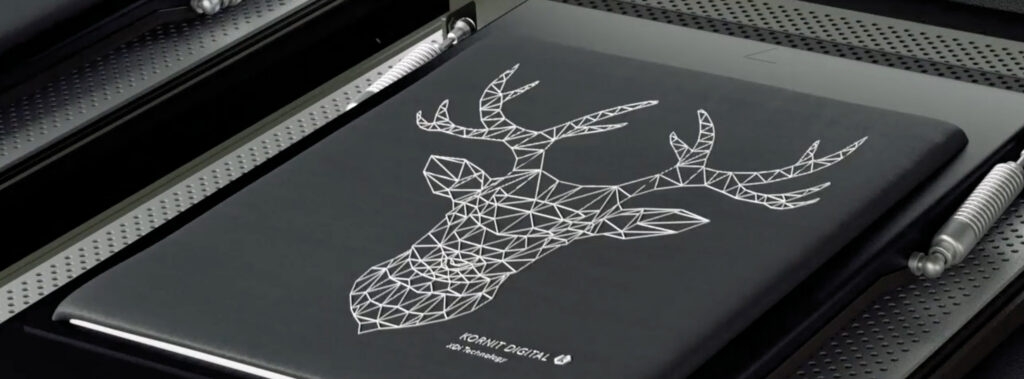
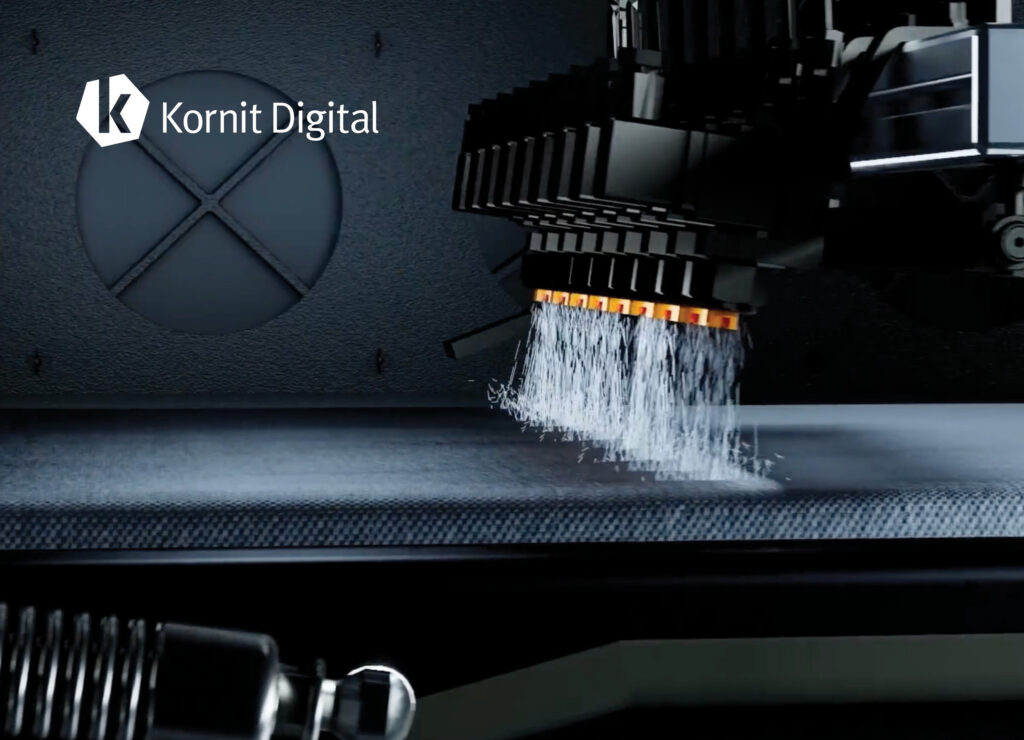
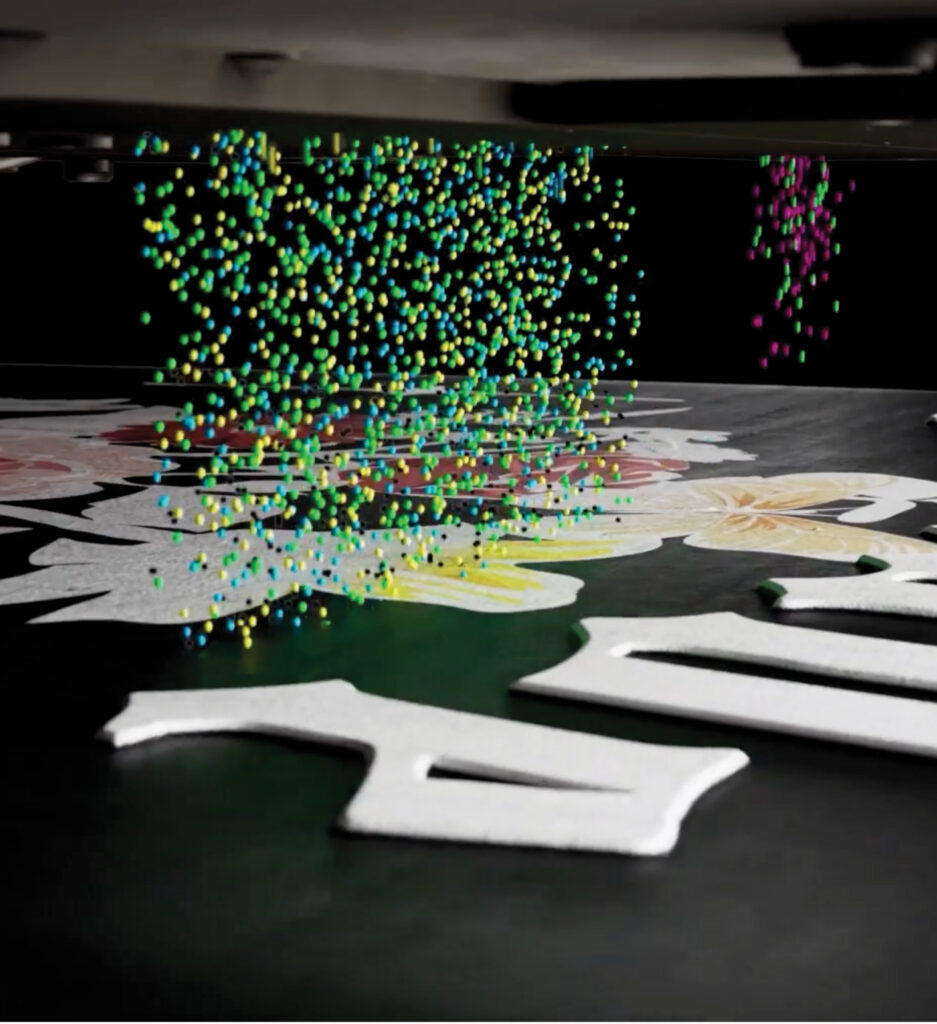
Direct-to-garment—or DTG—works like a sophisticated inkjet printer, applying artwork directly onto a finished garment. Because every design begins as a digital file, there are no individual screens to create for each colour. That makes it possible to reproduce photography, gradients, fine details and expansive multicolour artwork with far less setup than screen printing. Kornit brings this capability to an industrial scale, combining garment preparation, printing and curing into a streamlined workflow. Its water-based NeoPigment inks work across multiple apparel applications, while MAX and XDi technologies can produce expanded colour, neon shades and dimensional effects resembling raised ink or embroidery. The Atlas MAX PLUS can produce up to 150 impressions per hour with a print area of up to 90 × 60 centimetres. Kornit also offers specialized systems for polyester and performance apparel.
Why promotional apparel should care
The real advantage is not simply printing a complicated image. It is changing the economics of printing more than one image. Instead of producing 1,000 identical shirts, a digitally driven program could divide those shirts across multiple designs, cities, languages, recipient groups or individual names—without creating separate screens for every version. That enables:- Personalization by name, role, location or milestone
- Regional and culturally relevant campaign variations
- Smaller drops that can be tested and replenished
- More sophisticated, retail-inspired artwork
- Choice-based programs in which recipients select their preferred design
Choice turns a uniform into self-expression. And apparel people choose is apparel they are more likely to wear.
A smarter sustainability story
Kornit positions its technology around on-demand production, water-based inks and reduced water, energy and material waste. Producing closer to demand can also reduce overordering and obsolete inventory. For promotional programs, that may be the most meaningful benefit: brands no longer need to order excess merchandise simply to reach a lower unit price. But digital printing does not automatically make a garment sustainable. The blank, fibre composition, manufacturing conditions, shipping distance, durability and likelihood of continued use still matter. A responsibly printed shirt nobody wants is still waste.
Where Kornit wins—and where it doesn’t
Kornit-powered DTG is particularly compelling for short and medium runs, complex artwork, personalization, localized programs, rapid sampling, print-on-demand fulfilment and campaigns requiring numerous designs in smaller quantities. It will not replace every decoration method. For very large runs of identical shirts with simple artwork, screen printing may remain faster and more economical. Kornit itself describes a hybrid model: screen printing for long, repeatable runs and DTG for shorter, more complex or rapidly changing work. Embroidery still offers genuine thread and texture, while transfers can work well for unusual placements and certain fabrics. The right method should follow the idea, garment and quantity—not whichever machine a supplier happens to own.The Fabulist Take
Kornit removes one of promotional apparel’s most persistent excuses: We had to make everything the same because that was the economical way to do it. Increasingly, we don’t. The opportunity is not to print more promotional T-shirts. It is to produce fewer, smarter garments with greater relevance—apparel conceived as a collection rather than a commodity. Think less “logo on left chest.” Think employee-exclusive artwork, city editions, individually selected designs, limited releases and event merchandise created while the moment still matters. The printer may be industrial. The bigger shift is personal. Before choosing DTG, ask:- Would multiple designs create more relevance than one universal design?
- Could on-demand production reduce excess inventory?
- Will recipients have a meaningful choice?
- Does the garment feel worth keeping before anything is printed on it?
Because the best printing technology cannot rescue an ordinary shirt—or an idea nobody asked to wear.
https://www.kornit.com